Corner Connection Technologies in Aluminum Joinery
Corner connection technologies in aluminum joinery: pressing, Allen fastening, corner aligning. Which method to use and when?
The Importance of Corner Joints in Aluminum Joinery
The most critical points in an aluminum door or window are the corner joints. Incorrect or poor-quality corner connections lead to air seal failure, aesthetic deterioration, and structural collapse.
Main Corner Connection Methods
1. Corner Bracket + Pressing
The classic method. Profiles cut at 45° are joined by corner brackets inserted into their internal chambers and compressed in a press machine.
**Advantages**:
**Disadvantages**:
2. Allen Connection System
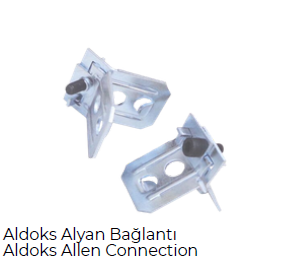
A small hole is drilled in the profile surface, and a set screw is tightened with an Allen key to expand the internal chamber and lock it with a wedge effect.
**Aldoks Allen Connection** is the best example of this system.
**Advantages**:
**Disadvantages**:
3. Corner Aligner (Çavuş)
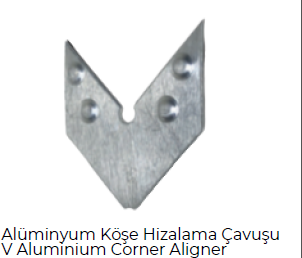
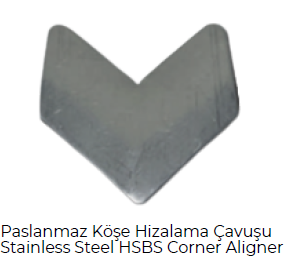
Not technically a joining method, but an **alignment aid**. Inserted into the profile grooves before pressing to ensure both profiles remain in the same plane.
**Aluminum Corner Aligner**:
**Stainless Corner Aligner**:
4. V-Corner Sheet
A planar fixing plate used particularly in sliding systems and fly screen profiles. Fits into profile grooves without jamming, thanks to internal notch and oval-tip design.
How to Choose the Right Technology?
| Situation | Recommended Method |
|---|---|
| Mass production, permanent | Corner Bracket + Pressing |
| Field installation, reassembleable | Allen Connection |
| Surface alignment issue | Corner Aligner |
| Sliding / fly screen | V-Corner Sheet |
Quality Control Recommendations
1. After pressing, measure corner gap with a vernier caliper (max 0.1mm)
2. In Allen connections, set torque according to manufacturer specifications
3. Verify that the corner aligner has not slipped out of the profile grooves
4. Confirm surface cleanliness before applying corner sealant